
Developing a new pair of sunglasses with an eyewear manufacturer usually starts with a design idea. The difficult part comes later, when that idea needs to become a product that a factory can actually produce in volume.
This becomes even more important with oversized polarized sunglasses. Large frames leave less room for mistakes in proportion, weight, lens shape, and fit. A frame that looks good in a drawing may feel too heavy when worn. A lens color that works well on a computer screen may look completely different on the finished product. Brands can avoid many of these problems by providing clear requirements before sampling begins.
The manufacturer needs to know what the brand wants to achieve, who will wear the product, what materials the collection should use, and which details cannot change during production. Good specifications give the development team something concrete to work with and make communication much easier on both sides.
Start With the Product Concept, Not Just a Reference Image
A reference image can communicate the general style of a pair of sunglasses, but it rarely provides enough information for production. A brand may send a picture of an oversized frame and ask for something similar. The manufacturer still needs to determine the actual frame width, lens height, bridge size, temple length, thickness, curvature, and other dimensions. Brands should provide as much information as possible at the beginning. A sketch, technical drawing, CAD file, physical sample, or several reference products can all help. It is also useful to explain what the brand likes about the reference. Perhaps the goal is the large lens coverage, the thick acetate frame, the retro shape, or simply the overall silhouette. That small amount of additional information can save several rounds of sampling.
Frame Material Can Change the Whole Product
Material selection deserves attention early in the development process. Acetate sunglasses remain popular in premium and fashion eyewear because acetate gives designers considerable freedom with color, pattern, thickness, and finishing. It also creates a different look and feel from injection-molded plastic. For an oversized frame, material choice affects more than appearance. It also influences weight, flexibility, balance, and the way the frame sits on the face.
Brands should decide whether they want standard acetate, premium acetate, translucent colors, layered patterns, solid colors, or a particular surface finish. If the brand already has a specific acetate color in mind, providing a physical color reference can help. Digital images often display colors differently from the actual material. This becomes particularly important when a collection includes several models that need to look like part of the same range.

Frame Size and Proportions Need Clear Specifications
“Oversized” does not describe one fixed frame size.
Different markets use different proportions, and brands may have their own interpretation of what an oversized frame should look like.
The manufacturer may need dimensions such as:
- Overall frame width
- Lens width and height
- Bridge width
- Temple length
- Frame thickness
- Lens curvature
- Temple thickness
Brands do not necessarily need to decide every dimension without assistance. An experienced manufacturer can review the proposed proportions and identify areas that may affect fit or production.
The important point is to establish the target dimensions before final sampling. A few millimeters can change the appearance of a large frame considerably.

Lens Requirements Should Go Beyond “Polarized”
If the product uses polarized lenses, the brand should define the lens requirements clearly. Polarized lenses can reduce reflected glare from roads, water, and other bright surfaces. This makes them suitable for outdoor use, travel, driving, and everyday wear. But polarization represents only one part of the lens specification. Brands may also need to decide on lens material, color, gradient treatment, tint density, lens curvature, surface finish, and other requirements relevant to the target market. For example, a fashion collection may use a gradient lens to create a softer appearance, while an outdoor-oriented product may favor a more uniform tint. The lens color also changes the overall appearance of the frame. Brands should review the frame and lens together rather than approving them as completely separate components.
Shield-Style Lenses Require Extra Attention
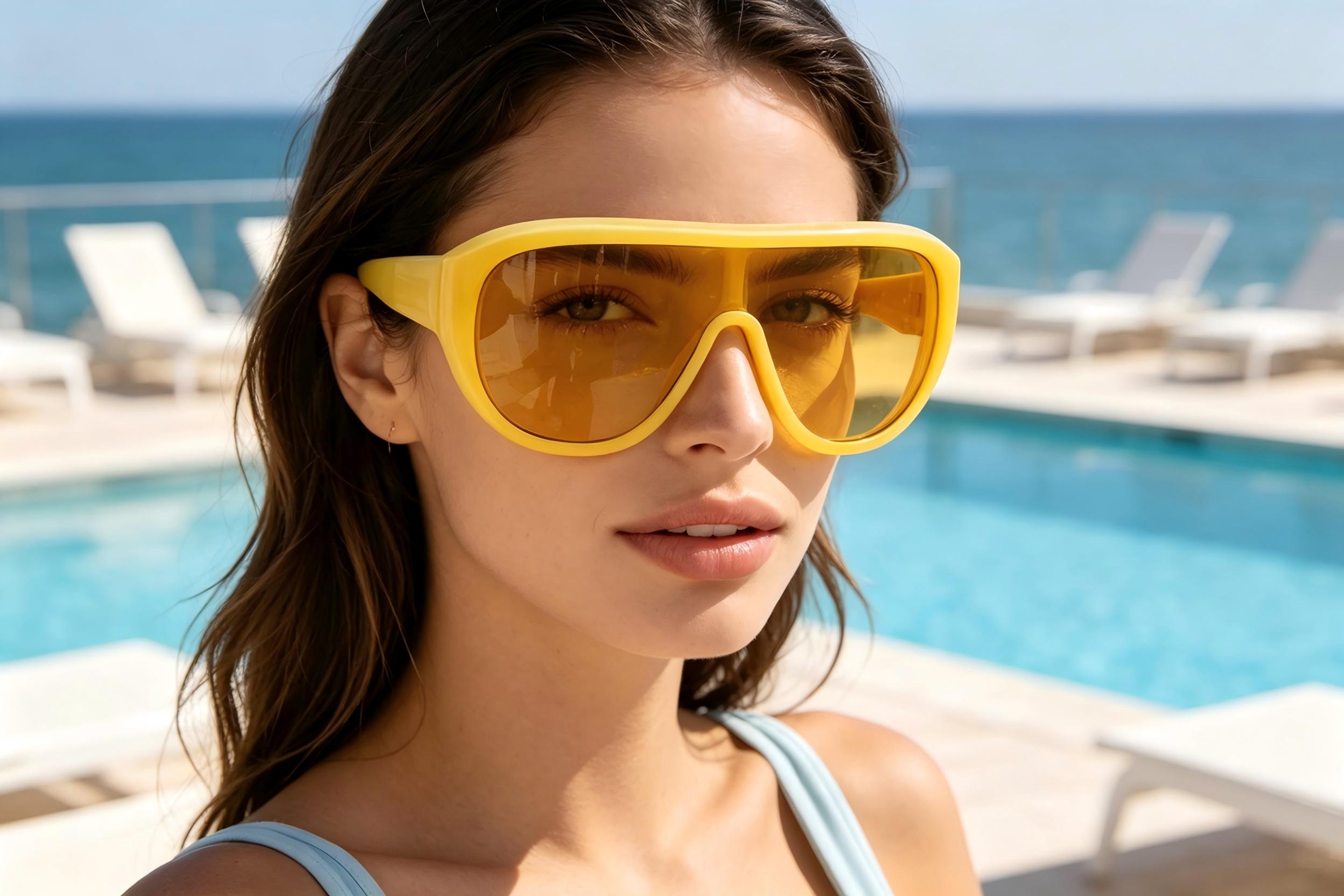
Large shield-style lenses have become an increasingly recognizable design choice in contemporary eyewear. Instead of using two separate lens shapes, the shield structure creates a more continuous front profile. This gives the sunglasses a modern appearance and provides broader visual coverage. The larger lens area also creates additional development considerations. The curvature needs to work with the frame structure. The lens needs to sit correctly within the frame, while the overall design still needs to provide a comfortable fit.
Brands should review the physical sample from several angles rather than judging the design only from the front. Side views, lens curvature, temple position, and the relationship between the frame and face can all change the final impression.
Don’t Overlook Weight and Balance
An oversized frame naturally uses more material than a smaller frame.
That does not automatically make it uncomfortable, but the manufacturer needs to consider where the weight sits.
A frame that carries too much weight toward the front can place additional pressure on the nose. Heavy or poorly balanced temples can also affect comfort around the ears.
During sampling, brands should wear the sunglasses for more than a few minutes. Walking, looking down, and wearing the product for an extended period can reveal problems that may not appear during a quick fitting.
The goal is not simply to make the frame as light as possible. The frame needs a sensible balance between structure, appearance, durability, and comfort.
Temple Design Affects Fit and Appearance
Temples are easy to overlook because most of the attention goes to the front of the sunglasses. In practice, they influence both the fit and the overall style. Brands should provide requirements for temple length, thickness, shape, curvature, hinge construction, and logo placement where applicable. Curved temples can help keep the sunglasses more secure during movement. For everyday and outdoor use, this can make a noticeable difference. The temple design also provides valuable space for branding. A manufacturer’s name, brand logo, model information, or other markings may appear on the inner or outer temple depending on the design. These details should receive approval before mass production.
Surface Finish Makes a Difference to Premium Eyewear
A good frame can still look ordinary if the finishing quality does not match the product positioning. Acetate frames can use different finishing treatments to create glossy, smooth, matte, or other surface effects. Polishing quality also affects how the material looks under retail lighting and in close-up product photography. For premium eyewear, buyers should inspect the frame edges, corners, temples, and other visible areas during sample approval. Color consistency matters as well. If the same model returns for another production run, the new batch should maintain the agreed appearance as closely as practical. This is one reason experienced buyers keep an approved sample or reference standard for future production.
Branding Should Be Planned Before Tooling
Custom eyewear often involves several branding elements. A brand may want its logo on the temple, lens, case, packaging, or cleaning cloth. Different locations require different production methods, and some methods need to be considered before the tooling or production process begins. For example, a printed logo, laser marking, metal logo, and molded logo will create different visual results. Brands should provide the logo artwork in a suitable format and confirm the exact position, size, and finish. It is much easier to make these decisions during product development than after mass production has started.

Packaging Also Needs a Specification
The sunglasses are only one part of a private-label eyewear product.
Depending on the sales channel, the order may also require a case, microfiber cleaning cloth, box, hang tag, barcode label, instruction card, or other packaging components.
An e-commerce brand may need stronger protective packaging for shipping. A retail brand may prioritize presentation and shelf appearance. A distributor may require specific carton markings for warehouse management.
The packaging should match the product positioning and distribution method.
Providing these requirements at the beginning also helps the manufacturer plan the complete order more accurately.
Quality Standards Should Be Agreed Before Production
Terms such as “premium quality” or “high quality” sound clear but can mean different things to different people.
A better approach involves defining measurable or inspectable requirements.
For customized polarized sunglasses, a quality specification may cover frame dimensions, weight, lens appearance, polarization, color consistency, surface finish, hinge function, logo position, assembly quality, and packaging.
The buyer and manufacturer should also agree on acceptable tolerances.
This becomes particularly important for larger orders. Even a well-controlled production line will have some degree of manufacturing variation. A clear tolerance range gives the inspection team a practical standard to follow.
Sampling Is Where Most Design Problems Should Be Found
A sample should answer practical questions before the brand commits to mass production.
- Does the frame look right when worn?
- Does the oversized shape feel balanced?
- Does the lens curvature match the design?
- Does the acetate color look the same as expected?
- Does the temple hold the frame securely?
- Does the logo appear in the correct position?
These questions are much easier to answer with a physical sample than with digital drawings.
For a new eyewear collection, brands may go through several rounds of samples. That process can feel slower at the beginning, but it usually saves much more time than correcting a large production run later.
Consider the Target Customer Before Finalizing the Specification
The right specification depends on who will buy the sunglasses.
- A fashion label may focus heavily on frame shape, acetate quality, lens color, and visual identity.
- A travel or outdoor brand may place more emphasis on polarized lenses, coverage, comfort, and secure fit.
- A mass-market retailer may need a different balance between material cost, appearance, durability, packaging, and retail price.
Brands should therefore define their target customer before locking the product specifications.
The manufacturer can then better understand why certain features matter and where the product needs to sit in the market.
OEM or ODM? The Development Process Can Be Different
Brands do not always enter a project with a finished design. Some companies have detailed drawings and specifications ready for an OEM sunglasses project. They mainly need a capable manufacturer to turn the design into a production-ready product. Others know the style and market they want but need support with the actual product development. In that situation, an ODM eyewear approach can provide more flexibility. The manufacturer may suggest different acetate materials, lens options, frame proportions, or construction methods based on the product concept. Neither approach is automatically better. The right choice depends on how much of the product the brand has already developed.
What Should a Brand Prepare Before Contacting a Manufacturer?
A well-prepared inquiry does not need to contain every technical detail.
At a minimum, brands should provide:
Product concept: Describe the style, target market, and intended use.
Reference material: Share drawings, images, CAD files, or physical samples.
Frame requirements: Define the preferred material, size, color, thickness, and finish.
Lens requirements: Specify polarization, lens color, gradient, material, and other relevant features.
Branding: Provide the logo artwork and preferred placement.
Packaging: Explain the required case, box, labels, and other accessories.
Quantity: Give an estimated order volume or expected annual demand where possible.
Quality expectations: Identify any specific testing or inspection requirements.
This information gives the manufacturer a much clearer picture of the project and makes the first quotation more meaningful.
Shengming Glasses: Professional Eyewear Manufacturing Since 2005
Shengming Glasses has specialized in eyewear manufacturing since 2005, providing premium acetate eyewear and trusted OEM & ODM solutions for customers worldwide. Our experience covers product development as well as manufacturing. We work with brands that need more than a standard catalog product and want to develop eyewear around a particular market, design direction, or brand identity. For custom oversized polarized sunglasses, customers can discuss frame materials, proportions, acetate colors, lens options, temple design, surface finishing, branding, and packaging during the development process. Our acetate sunglasses combine contemporary styling with everyday comfort. Lightweight frame construction, smooth finishing, and curved temples help create a secure fit without putting unnecessary pressure on the wearer during longer use. For designs with shield-style lenses, the larger front profile creates a distinctive modern look while providing broader coverage. Gradient lens options can also add a fashion-focused appearance for collections intended for daily wear, travel, and outdoor activities.
The development process starts with the customer’s requirements. From there, our team can work through material choices, design details, samples, and production specifications before moving into larger-scale manufacturing.
Good Customization Starts With Clear Communication
A successful custom eyewear project rarely comes from a single reference image. The brand needs to communicate the product concept, while the manufacturer needs enough technical information to turn that concept into a workable design. For oversized polarized sunglasses, frame proportions, acetate quality, lens construction, weight, temple design, finishing, branding, and packaging all deserve attention. None of these details needs to become unnecessarily complicated, but leaving them undefined can create problems later.
A clear product specification gives the development team a practical direction. A well-reviewed sample confirms whether the concept works in the real world. Consistent production then helps the brand maintain the same product experience as order volumes grow.
For brands looking to develop premium acetate sunglasses or other custom eyewear, Shengming Glasses combines long-term manufacturing experience with OEM and ODM development capabilities to support projects from the initial product concept through production.