

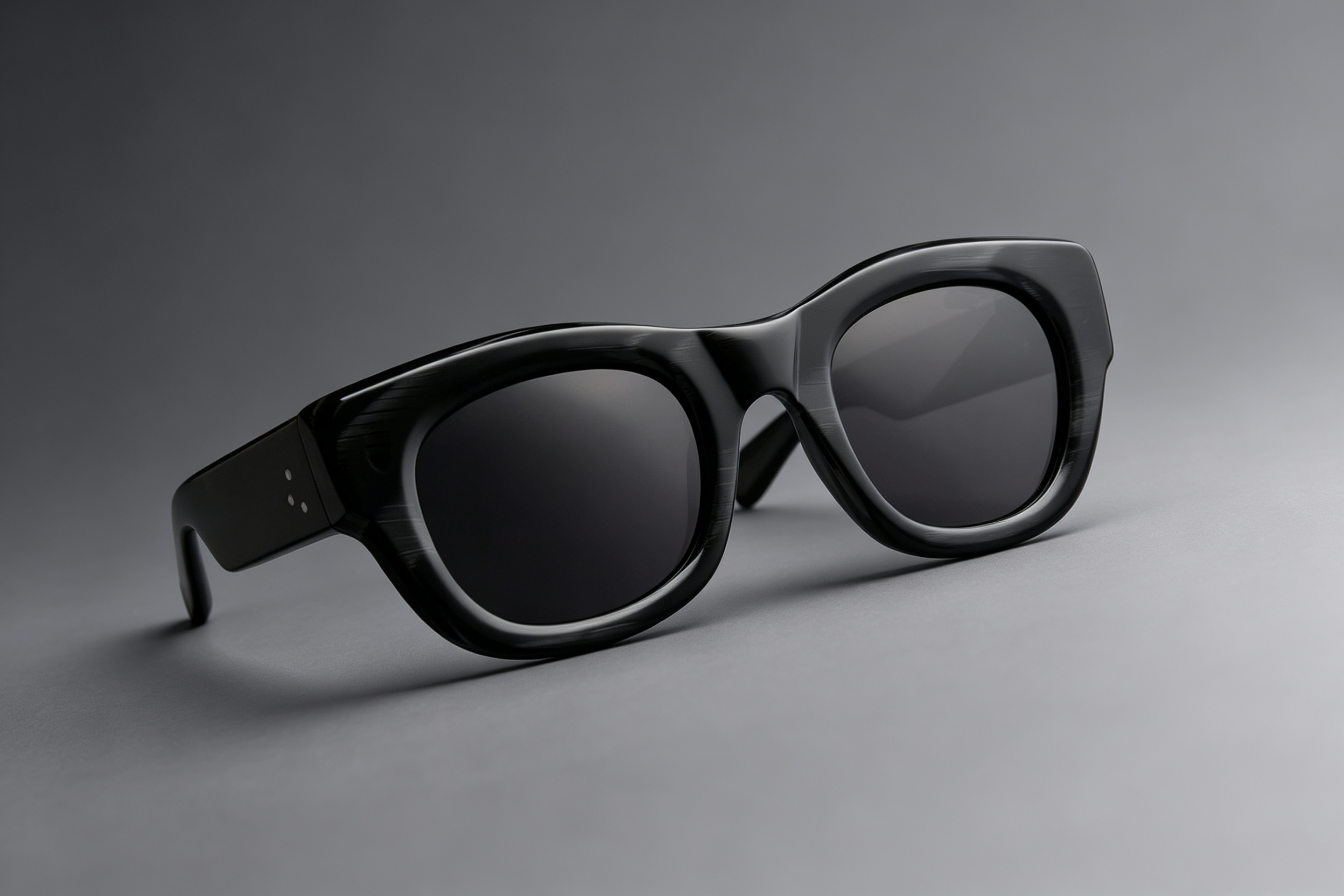
Why Are Acetate Eyewear Frames More Expensive Than Regular Plastic Frames?
When shopping for eyewear, you may notice that some frames are significantly more expensive than others. Among premium eyewear materials, acetate (cellulose acetate) frames are often priced higher than standard plastic frames. This difference is not simply a matter of branding—it reflects substantial differences in material quality, manufacturing processes, durability, aesthetics, and sustainability.
This article explains the key differences between acetate and plastic eyewear to help you understand why acetate frames are considered a worthwhile investment.
1. Material Composition: Natural vs. Synthetic
Acetate, also known as cellulose acetate, is a plant-based material primarily derived from cotton fibers and wood pulp. As a renewable and biodegradable material, acetate offers excellent environmental benefits while delivering a premium look and feel.
Its natural composition provides several advantages:
- Rich, luxurious appearance with deep color saturation
- Smooth, warm texture for enhanced comfort
- Hypoallergenic properties suitable for sensitive skin
- Lightweight yet durable construction
In contrast, standard plastic frames are commonly manufactured from petroleum-based materials such as polycarbonate (PC), nylon, or TR90. These synthetic plastics are less expensive to produce and allow for high-volume manufacturing. While modern plastics can be lightweight and durable, they generally cannot match acetate in terms of texture, visual depth, or sustainability.
2. Manufacturing Process: Handcrafted Precision vs. Injection Molding
One of the primary reasons acetate frames cost more is the complexity of their manufacturing process.
Acetate Frame Production
The production of acetate eyewear involves multiple labor-intensive steps:
Sheet Production and Aging
Acetate is first produced as large sheets that are carefully cured for several months—and sometimes up to a year—to stabilize the material and minimize future deformation.
Precision Cutting
After curing, CNC machines precisely cut the frame front, temples, and other components from the acetate sheets. Because colors and patterns are layered throughout the material rather than printed on the surface, every cut maintains consistent color and texture.
Hand Polishing and Finishing
The components undergo multiple rounds of tumbling and polishing, often lasting several days. Skilled craftsmen then complete detailed hand polishing and finishing to create the signature high-gloss appearance and smooth surface associated with premium acetate eyewear.
This extensive craftsmanship significantly increases production time and manufacturing costs.
Plastic Frame Production
Plastic frames are typically manufactured using injection molding.
The process includes:
- Melting plastic pellets
- Injecting the material into precision molds under high pressure
- Cooling and removing the finished frame
Injection molding is highly automated and extremely efficient, making it ideal for mass production and reducing manufacturing costs.
However, colors and patterns on plastic frames are often applied through painting or printing processes. Once the surface becomes scratched, the underlying material may become visible, unlike acetate where the color extends throughout the frame.
3. Durability and Adjustability
Acetate is widely recognized for its outstanding durability and flexibility.
Its advantages include:
- Excellent resistance to cracking and deformation
- Long-lasting color retention
- Superior structural stability
- Heat-adjustable fit for personalized comfort
Professional opticians can gently heat acetate frames to reshape them for a more precise fit, improving both comfort and long-term wearability.
Standard plastic frames generally offer lower adjustability. While high-performance plastics such as TR90 provide good flexibility, many conventional plastic frames are more prone to breaking under impact and cannot be easily adjusted after manufacturing.
4. Design Aesthetics and Customization
Acetate offers exceptional design flexibility.
By laminating multiple layers of different colors, transparencies, and textures, manufacturers can create distinctive visual effects that cannot easily be achieved with ordinary plastics.
Popular acetate finishes include:
- Classic tortoiseshell patterns
- Crystal transparent designs
- Multi-layer color combinations
- Marble and gradient effects
- Custom laminated patterns
These rich colors and natural depth make acetate the preferred material for luxury eyewear brands and designer collections.
Plastic frames, by comparison, typically rely on surface coatings or printed finishes, limiting the complexity and visual depth of their appearance.
5. Sustainability and Environmental Responsibility
As sustainability becomes increasingly important, acetate provides a more environmentally responsible alternative to conventional plastics.
Because it is derived from renewable plant-based resources and is biodegradable under appropriate conditions, acetate aligns with today’s growing demand for eco-friendly products.
Although manufacturing acetate requires greater investment in both materials and craftsmanship, many consumers consider its environmental advantages an important part of its value.
Why Choose Acetate Eyewear?
The higher price of acetate eyewear reflects far more than appearance alone. Premium acetate frames combine:
- High-quality plant-based materials
- Skilled craftsmanship and meticulous finishing
- Superior durability and long-term performance
- Exceptional comfort and adjustability
- Distinctive colors and premium aesthetics
- More sustainable manufacturing
For consumers seeking premium quality, lasting comfort, refined design, and environmentally conscious products, acetate eyewear represents an investment that delivers value well beyond its initial purchase price.